
First laboratory characterisation of CRNS instruments at PTB
February 2024
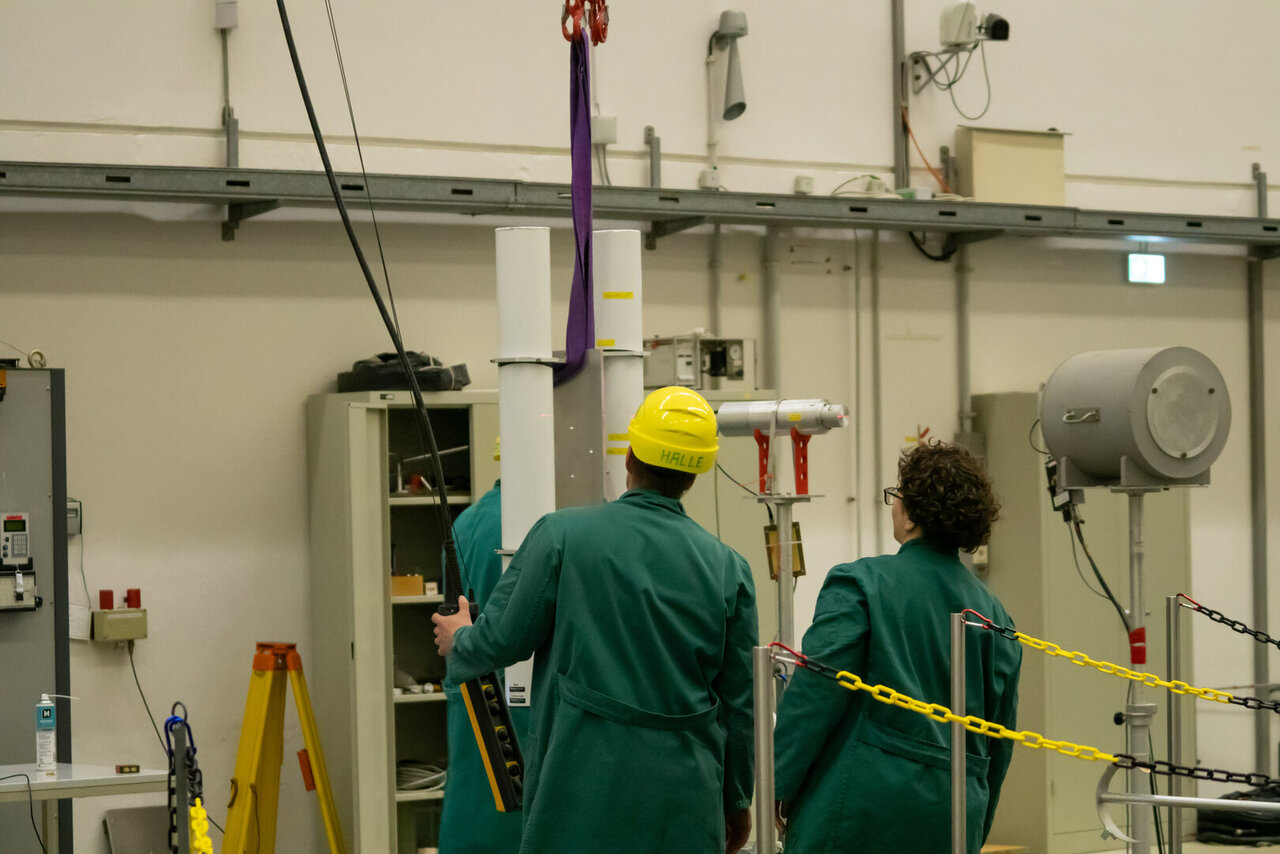
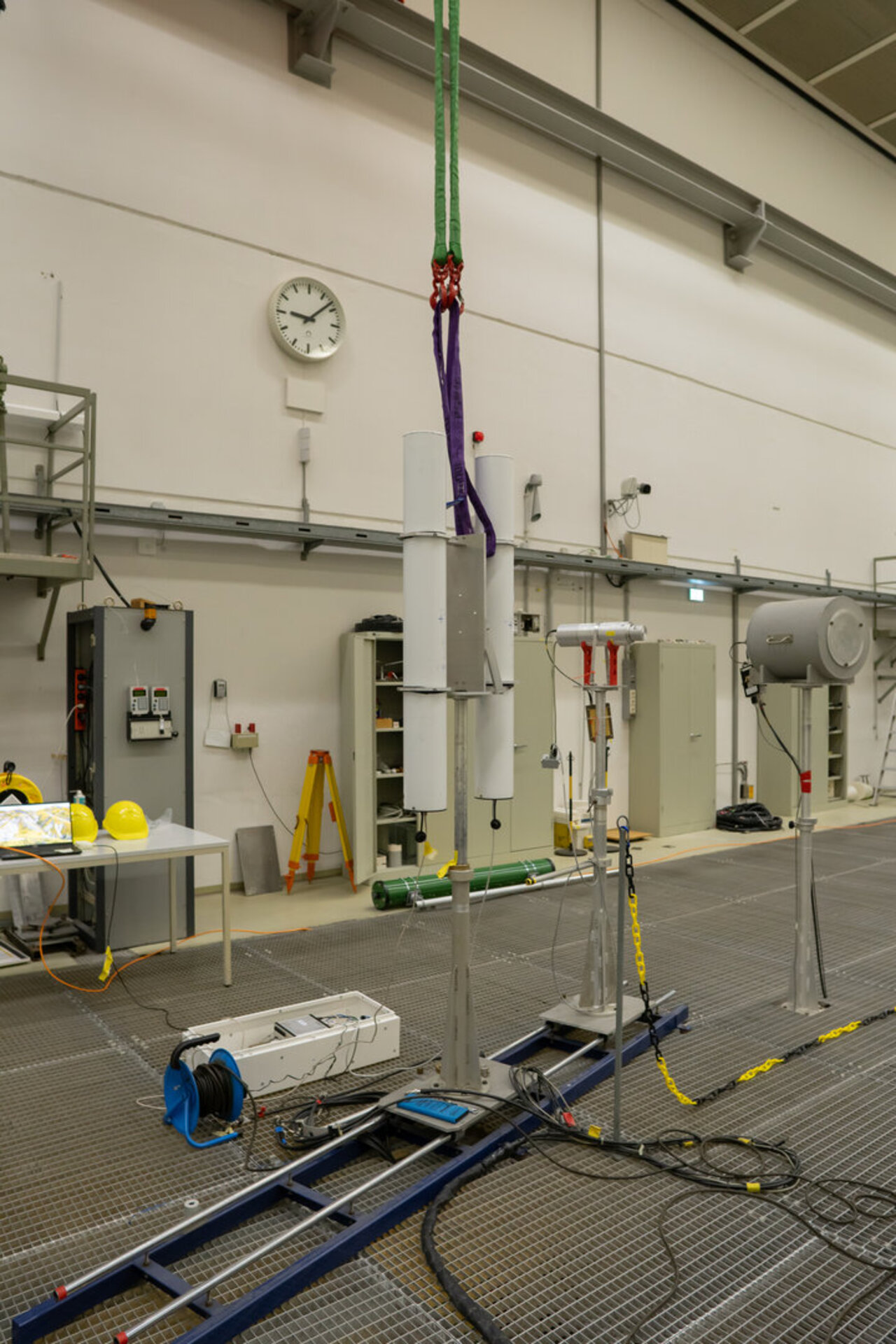
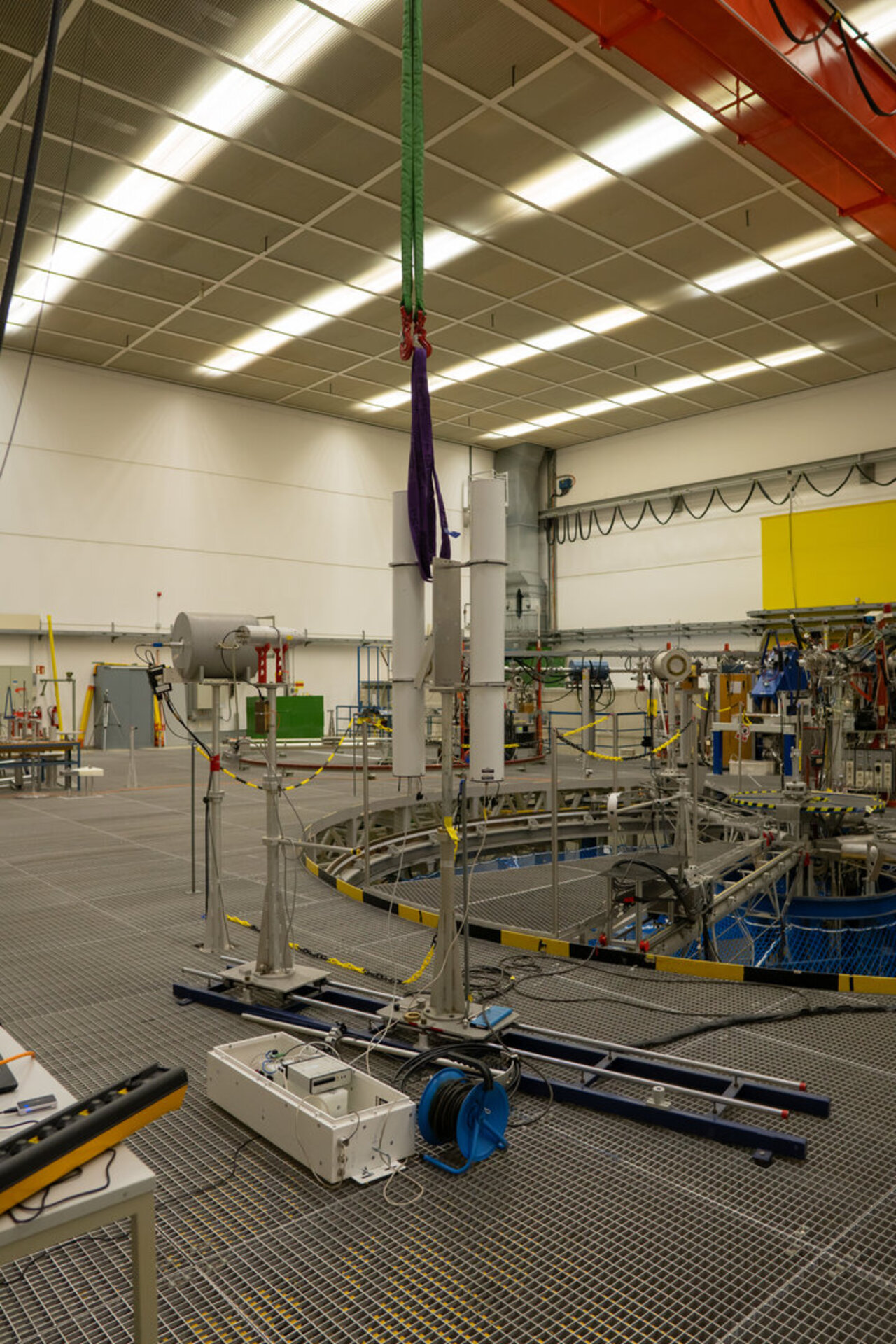
Several types of commercial cosmic-ray neutron sensing (CRNS) instruments were characterised at the PTB Ion Accelerator Facility (PIAF) during the week beginning 12 February 2024. This marked the first time that such instruments had been characterised under controlled conditions in a metrology laboratory.
In natural environments, CRNS instruments monitor soil moisture by continuously detecting naturally occurring neutrons near the land surface. Soil water influences the energy and number of these neutrons, allowing changes in the measured signals to be related to soil moisture over an area considerably larger than that sampled by point-scale sensors.
At PIAF, neutrons with well-defined energies are produced through nuclear reactions. The resulting neutron reference fields are used in neutron metrology to determine the energy-dependent response of instruments such as spectrometers, detectors, monitors and personal dosemeters. Measurements of neutron fluence in these fields are traceable through the neutron-proton scattering cross section, the primary reference in neutron metrology.
During the campaign, the CRNS instruments were irradiated in several SI-traceable neutron reference fields. The measurements provided quantitative information about their sensitivity and neutron-energy response under controlled laboratory conditions, establishing a metrological foundation for comparing the instruments and interpreting their behaviour.
A second joint neutron beamtime at PTB followed in March 2024. The performance of the instruments was subsequently investigated under outdoor conditions at the SoMMet test field sites.